Waterlow Score: A Practical Pressure Care Guide for Occupational Therapists and Care Homes
A Waterlow score helps care teams identify a person’s risk of developing a pressure ulcer. For occupational therapists and care homes, the score should lead to a clear question: where, during the day, is pressure building up and what can we do about it?
A person may be at risk when sitting in a wheelchair, relaxing in a high-backed chair, using a shower chair, transferring in a hoist sling or lying in bed. Each situation creates different contact points, positioning demands and risks from pressure, friction, shear, heat and moisture.
Gel Ovations provides pressure care products that help professionals address these daily challenges. Our medical-grade silicone gel products can support an individualised pressure care plan through seating, bathing, transfers and specialist equipment.
Important: The Waterlow score supports professional judgement. It does not replace a skin assessment, a seating assessment, repositioning, moving and handling guidance, or a personalised care plan.
On This Page
- Seating and posture
- Vulnerable contact points
- The full daily routine
- Review and reassessment
- Dimensional Gel for wheelchair and static seating
- Dimensional Gel Plus for prominent bony areas
- Bathroom pressure care for shower and commode chairs
- SlingGel for hoist transfers
- Made-to-measure solutions for complex needs
- Can Gel Ovations products lower a Waterlow score?
- What is the best pressure cushion for a person with a high Waterlow score?
- Are Dimensional Gel pads suitable for care homes?
- Can Gel Ovations help with shower chair pressure care?
- Do pressure care products replace repositioning?
What is the Waterlow score?
The Waterlow score is a structured pressure ulcer risk assessment widely used across UK health and social care. It looks at several factors that can increase the chance of pressure damage, including:
- Skin condition and existing areas of concern
- Mobility and ability to reposition
- Continence and exposure to moisture
- Build, weight, appetite and nutritional status
- Age and sex
- Neurological conditions, medication, surgery, trauma and other clinical risks
The scores are added together to place the person within a risk category. The official Waterlow score card identifies the following thresholds.
| Waterlow score | Risk level | What it should prompt |
|---|---|---|
| 10–14 | At risk | Preventive care, regular checks and review of risk areas |
| 15–19 | High risk | A documented individual plan, closer monitoring and equipment review |
| 20+ | Very high risk | A comprehensive plan with prompt clinical review and targeted support |
A score below 10 does not mean there is no risk. A person with fragile skin, an unusual posture, an ill-fitting chair or a medical device creating a local pressure point may still need intervention.
NICE guidance on pressure ulcer prevention states that risk assessment should be documented and followed by an individualised care plan. This should consider the person’s mobility, skin assessment, ability to reposition, comorbidities and preferences.

Why the Waterlow score matters in care homes
A care home resident’s pressure risk is rarely limited to the time spent in bed. Many residents spend long periods in a lounge chair, wheelchair, dining chair, shower chair or commode. Pressure care therefore needs to follow the person through their day.
A Waterlow assessment helps care staff recognise when a person needs closer observation and escalation. However, the best outcomes come when the assessment becomes a practical plan that every member of the team can understand.
For care homes, this may mean reviewing:
- How long a resident spends seated and whether they can change position independently
- The fit, condition and height of their wheelchair or static chair
- Whether showering and toileting equipment creates pressure or shear around vulnerable skin
- The impact of moisture, continence care and clothing
- Hoist sling seams and edges during assisted transfers
- Changes after illness, infection, hospital admission, weight loss or reduced mobility
This approach makes risk assessment meaningful. It helps staff spot where support is needed before a small concern becomes skin damage.
What occupational therapists should consider after a Waterlow assessment
Occupational therapists bring an important practical perspective to pressure care. The score identifies risk; the equipment assessment identifies the person’s functional routine, posture and contact areas.
When reviewing someone with an increased Waterlow score, consider the following.
Seating and posture
Look at pelvic position, trunk support, foot support and time spent in the chair. A thick pressure cushion may affect transfer height, foot placement and stability. It may also change the relationship between the person and their arm supports, laterals or headrest.
Low-profile protective layers can be useful where targeted pressure care is required without substantially changing seating height or established posture.
Vulnerable contact points
Bony prominences and pressure areas vary from person to person. Common areas include the sacrum, ischial tuberosities, heels, elbows, spine, knees and areas affected by equipment edges.
The key is to identify the exact location and the forces involved. Is it direct pressure? Is the person sliding forward? Is moisture involved? Does a hard surface or seam create friction during a specific activity?
The full daily routine
A wheelchair cushion may be appropriate for seating, but the person may still be vulnerable during showering, toileting or hoist transfers. A 24-hour approach considers every activity rather than relying on a single pressure cushion to solve every problem.
Review and reassessment
Risk can change quickly. A decline in mobility, reduced appetite, infection, medication change or discharge from hospital should prompt a review. The right solution may change too.
How Gel Ovations products can support pressure care
Gel Ovations products help provide targeted protection where a person’s assessment identifies a need. They are used by OTs, tissue viability teams, care homes and wheelchair services across the UK.
Dimensional Gel for wheelchair and static seating
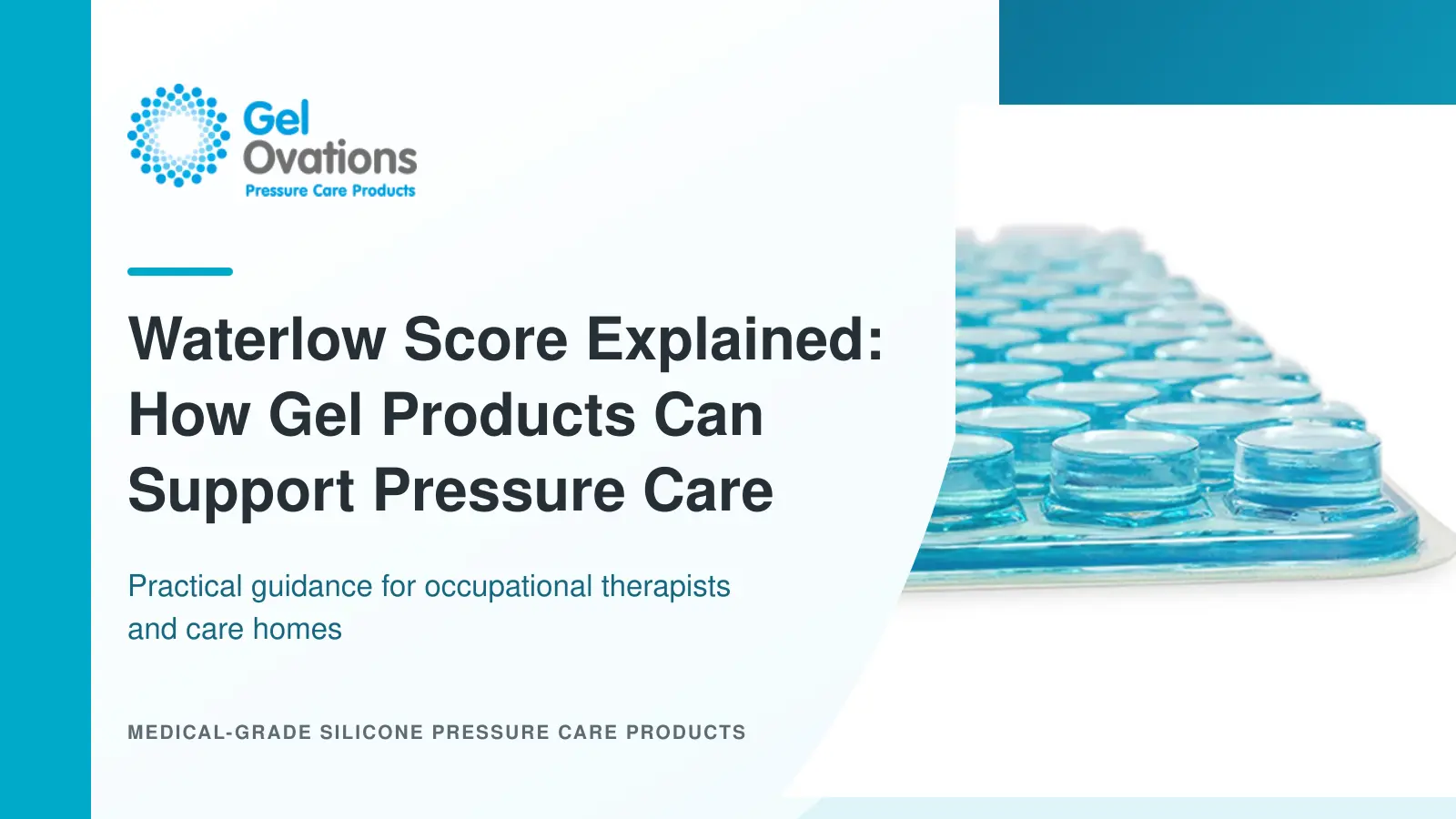
Dimensional Gel is a low-profile, medical-grade silicone gel pad designed to help redistribute pressure while maintaining seating posture. Its cellular design allows the gel to contour to the body, supporting immersion and envelopment around contact areas.
The gel cells are designed to help manage shear and friction. Airflow channels also help support a cooler, drier microclimate at the skin interface.
Dimensional Gel can be considered for:
- Wheelchairs and powerchairs
- Recliners and static lounge chairs
- Specialist seating systems
- Dining chairs
- Commode and shower chair seating
- Localised protection around equipment contact points
For OTs, the low profile is valuable when a bulky cushion could alter seat height, transfer safety or the person’s established postural support. It should always be assessed with the existing chair and seating components.


Dimensional Gel Plus for prominent bony areas
Dimensional Gel Plus is 40% thicker than standard Dimensional Gel. It provides greater immersion and envelopment for people with bony prominences, prolonged seating needs or limited mobility.
It is a useful option to explore when a clinician identifies that a standard low-profile pad does not provide the required level of contouring. Product selection must still account for posture, transfer height and compatibility with the complete seating system.
Bathroom pressure care for shower and commode chairs
Personal care is often overlooked during a pressure care review. Yet shower chairs, commodes and toilet seats can create pressure, friction and shear when skin is at its most vulnerable to moisture.
Our bathroom pressure care accessories include seat overlays, backrest overlays, toilet seat pads, gel wraps and protective covers. They provide options for universal-fit and selected brand-compatible shower chair products.
Gel Ovations has accessories for chair ranges including Aquatec Ocean, Raz Rehab, ETAC Clean, ETAC Swift, Osprey and Prism Freeway. Check the exact chair model and product compatibility before selecting an accessory.
For care homes, these products can help extend a resident’s pressure care plan into bathing and toileting routines. For OTs, they can help solve a specific contact-point problem without replacing familiar bathroom equipment.
SlingGel for hoist transfers
A person may be well supported in their chair but still experience discomfort or skin marking from sling seams and edges during transfers.
SlingGel is designed to support pressure distribution and help reduce shear and friction during hoist transfers. It provides a targeted protective layer at sling contact points.
Any sling accessory must be considered within the moving and handling risk assessment. Follow the instructions for the sling, hoist and accessory, and check that safe use is not affected.

Made-to-measure solutions for complex needs
Sometimes the problem is too specific for an off-the-shelf product. A person may have an unusual posture, contractures, a specialist chair, a non-standard commode aperture or a pressure point created by existing equipment.
Gel Ovations’ Made to Measure service works with occupational therapists and clinicians to create bespoke pressure care products. We can develop gel pads, overlays and covers from measurements, templates or drawings.
Made-to-measure solutions can include:
- Shower, commode and toilet seat overlays
- Wheelchair seating pads
- Armrest, footplate and leg-rest protection
- Backrest, headrest and lateral support overlays
- Protective pads shaped around specific equipment
- Pressure care solutions for contractures or individual positioning needs
This gives care homes and clinicians a practical route forward when standard products do not fit the person or equipment correctly.
Frequently asked questions
Can Gel Ovations products lower a Waterlow score?
No. The Waterlow score reflects the person’s assessed risk factors. Gel products can support an individualised pressure care plan by helping manage pressure, friction and shear at identified contact points.
What is the best pressure cushion for a person with a high Waterlow score?
There is no single best product based on the score alone. An occupational therapist or other qualified healthcare professional should assess the person’s posture, skin, mobility, seating, activity and pressure areas before choosing a product.
Are Dimensional Gel pads suitable for care homes?
Yes. Dimensional Gel pads can be used in a range of care settings, including wheelchairs, static chairs and personal care equipment. The right size, placement and cover should be chosen for the person and the equipment.
Can Gel Ovations help with shower chair pressure care?
Yes. Gel Ovations offers universal and brand-compatible shower chair accessories, as well as made-to-measure overlays for more complex needs.
Do pressure care products replace repositioning?
No. Pressure care products support a wider individual care plan. Continue to follow the documented repositioning schedule, skin checks and clinical advice.
Pressure care support for occupational therapists and care homes
A Waterlow score is most valuable when it leads to appropriate action. Gel Ovations helps OTs and care homes turn identified risks into practical pressure care solutions for seating, showering, toileting and transfers.
Explore our pressure care products or contact Gel Ovations to discuss standard and made-to-measure options for an individual’s assessed needs.
A simple pressure care checklist for care home teams
When a Waterlow score identifies increased risk, ask these questions during the review:
- Where does the resident spend time each day? Include bed, wheelchair, lounge chair, dining chair, bathroom and transport.
- Can they reposition independently? Record what assistance is needed and when.
- Are there any skin changes or reports of discomfort? Escalate concerns according to the care plan.
- Is the equipment suitable and correctly fitted? Look for hard edges, seams, sliding and poor posture.
- Is moisture a factor? Review continence care and bathroom equipment.
- Are transfers creating pressure or friction? Check sling positioning and contact points.
- Has anything changed? Mobility, appetite, health, medication and weight can all affect risk.
Document the actions taken and review them regularly. This builds a consistent plan around the person rather than a score sitting in a file.